TaperMode
All style references
Low taperFrequent upkeep

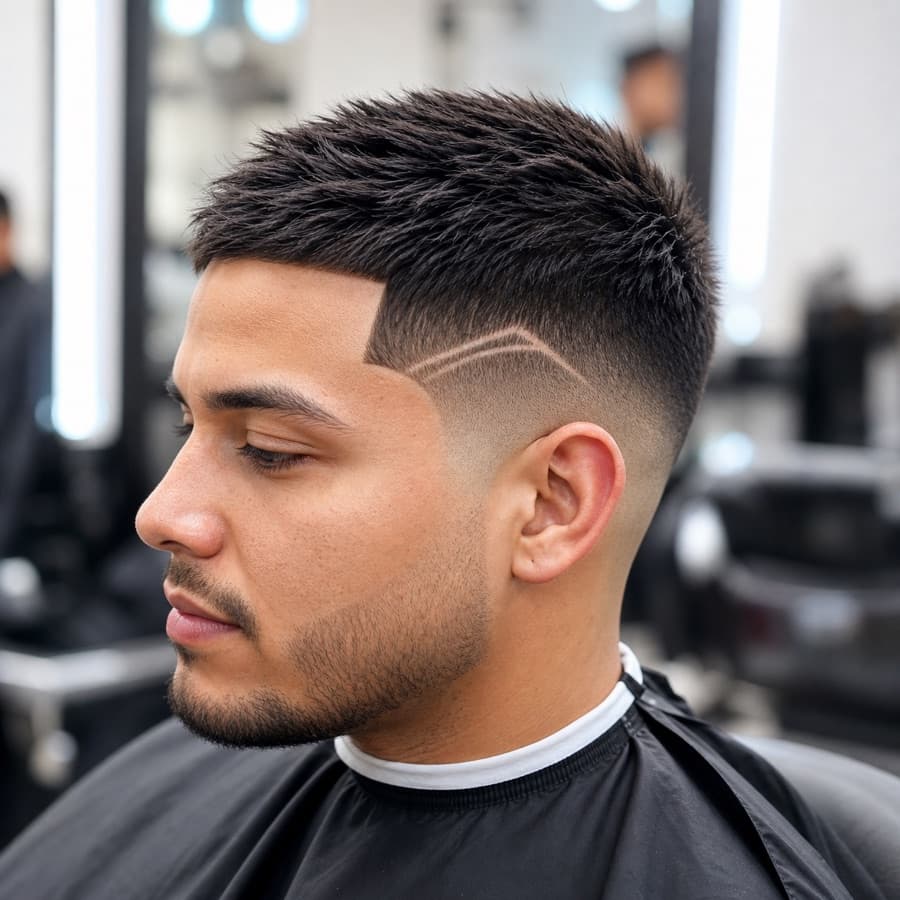
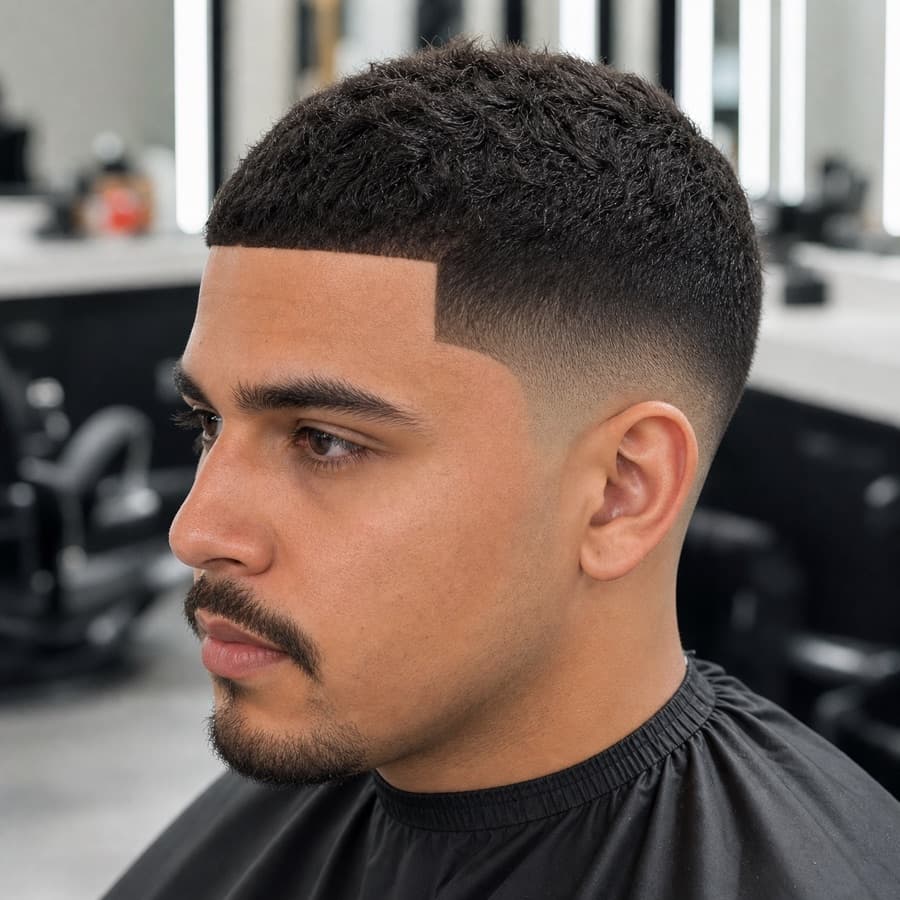
Low Taper Fade with Design

A low taper with a subtle shaved design near the temple; the design requires precise clipper control.

Texture labels organize the catalogue; they are not a suitability prediction.

Generated side profile of a low taper fade with a shaved design.Generated illustration
Illustrative only—not a preview of your result. This image has not been barber reviewed, and one angle cannot show the full transition, neckline, or growth pattern.

Cut notes

How the low taper fade with design is built

Low Taper Fade with Design, side viewSide view. Only the sideburn and the neckline corner are shortened, down to a soft, natural edge; the rest of the side keeps its length. Two thin design lines are shaved in behind the ear.

Side

Low Taper Fade with Design, back viewBack view. Only the neckline is tapered, down to a soft, natural edge; the back keeps its length. Two thin design lines are shaved in behind the ear.

Back

Original TaperMode diagram, not a photo. The orange line marks where the blend starts; dark to light shows longer hair getting shorter.

Versus its nearest sibling

Low Taper Fade with Line-Up

Both add precision work to a plain low taper, but in different places.

  • A line-up sharpens the outline of the hairline itself: the forehead, temples and sideburn corners. A design is a pattern shaved into the side, usually behind the ear or at the temple, and leaves the hairline alone.
  • A line-up is redone at almost every visit. A design is a choice you can drop at any cut and go back to the plain low taper.

Ask for it exactly

  1. “Low taper at the sideburns and neckline, natural at the bottom, blended up to about a #2.”
  2. “One or two thin lines behind the ear (or at the temple), no wider than the taper area.” Point to the exact spot.
  3. Agree the design before the clippers start: sketch it, or ask your barber to pencil it on first.
  4. “Keep the top natural; I only want the sides and the design changed.”
What the guard numbers mean

Hair-type notes

Dark, dense hair
Gives the strongest contrast, so thin single lines read clearly even from a distance.
Light or fine hair
Lines can disappear against the scalp; ask for a slightly bolder line or a simpler shape.
Curly and coily hair
Designs need the surrounding hair short enough to frame them, so the barber may take a small patch shorter than the rest of the taper.

How it grows out

  1. Days 1–7

    The lines are sharpest in the first few days and start to fill with stubble within about a week.

  2. Weeks 2–3

    The pattern softens into a shadow and the taper edges begin to look grown in.

  3. Weeks 3–4

    Most of the design has grown out. Book a touch-up, or let it go and keep the plain low taper.

  4. Next cut

    Re-cut the design only on freshly tapered hair; cutting into grown-out hair makes it look patchy.

Based on average growth of about 1 to 1.25 cm a month. Yours may be faster or slower.

Three-question conversation check

Will this work for me?

Compare your routine with the catalogue tags, then carry the useful context into your private barber brief. This is a starting point—not a suitability score or result prediction.

0 of 3 answered

What is your hair texture?
Which face shape is your closest starting point?
How often are you comfortable refreshing the cut?

Answer all three questions to see the catalogue signals and the exact adaptations worth discussing.

Plain-language starting points

What you could discuss

These are editable prompts, not exact instructions or a substitute for an in-person consultation.

  1. 1

    Keep the taper low and add one clean design line near the temple.

  2. 2

    Make the design subtle, not too high or too wide.

  3. 3

    Keep the top natural and balanced.

Add current length, routine, and keep/avoid outcomes in the full builder.

Build editable brief

What the catalogue description is trying to show

  • Simple design lines age better than crowded patterns.
  • The design should sit inside the faded area, not cut into the top.

Upkeep and styling considerations

  • Shaved design lines become less distinct as the hair grows.
  • Avoid trying to recut the line at home.
  • Book a quick touch-up before events.

Compare another direction

Related catalogue references

These links are based on shared catalogue tags and hand-authored variation links, not observed user preference.

All references