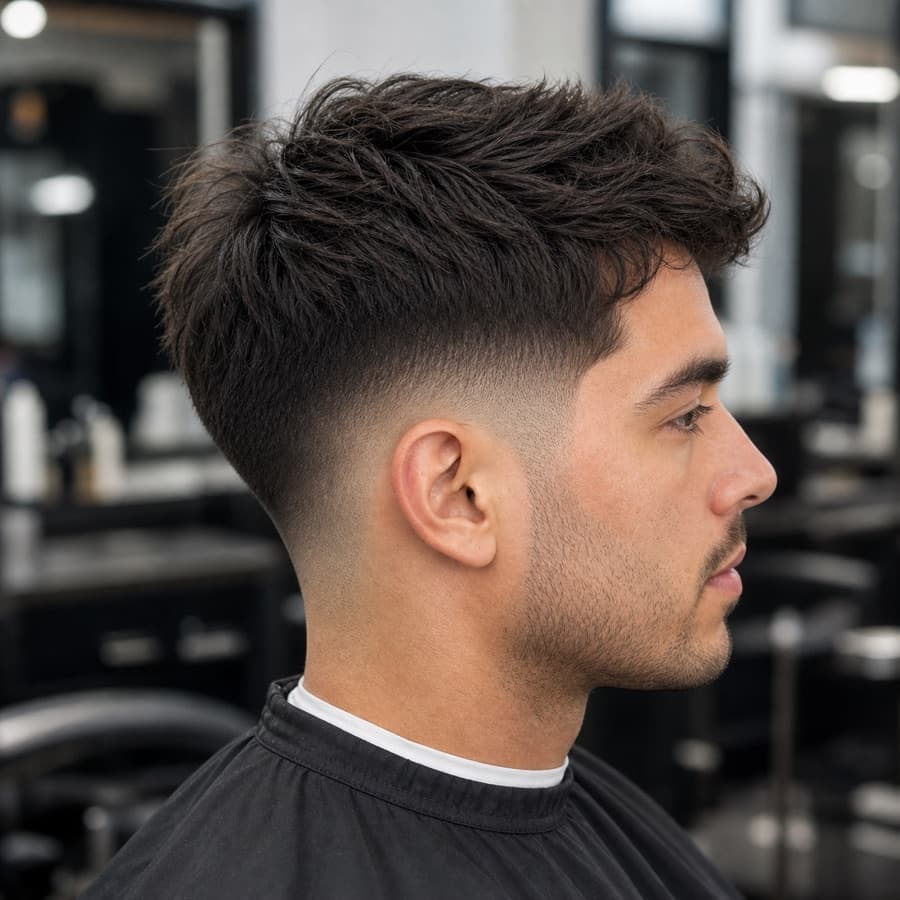
Generated illustrationMid taper
Regular upkeepstraight + wavy
Mid Taper Fade
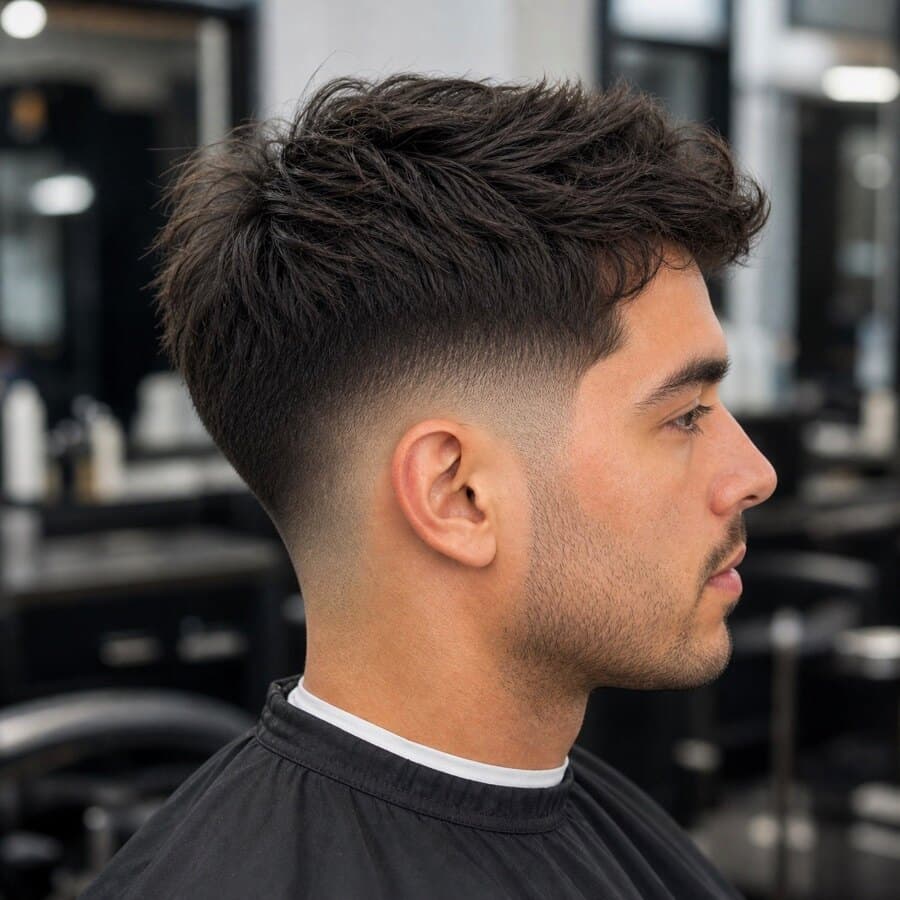
A balanced taper that starts higher than a low taper, giving more contrast while staying wearable.
Illustrative only. Not a prediction or barber-reviewed reference.
A mid taper for curls that gives more visible side cleanup than a low taper while preserving curl height.
Texture labels organize the catalogue; they are not a suitability prediction.
 Generated illustration
Cut notes
Side
Back
Versus its nearest sibling
A higher, more visible version of the curly low taper.
Week 1
Clean, defined sides; curls sit neatly above the blend.
Weeks 2–3
The taper softens and the sides start to widen as curls regrow.
Weeks 3–4
A side clean-up keeps the shape; a two- to four-week rhythm is common for mid tapers.
Longer
Curls on top can usually go longer between cuts than the sides.
Based on average growth of about 1 to 1.25 cm a month. Yours may be faster or slower.
Three-question conversation check
Compare your routine with the catalogue tags, then carry the useful context into your private barber brief. This is a starting point—not a suitability score or result prediction.
0 of 3 answered
Answer all three questions to see the catalogue signals and the exact adaptations worth discussing.
Plain-language starting points
These are editable prompts, not exact instructions or a substitute for an in-person consultation.
Use Mid Taper Fade for Curly Hair as the starting reference.
Use a mid taper but do not cut too high into the curl shape.
Keep the curls full and shape the sides so they do not widen too much.
Please adjust the finish after checking my current length, density, and growth pattern.
Add current length, routine, and keep/avoid outcomes in the full builder.
Build editable briefCompare another direction
These links are based on shared catalogue tags and hand-authored variation links, not observed user preference.
A balanced taper that starts higher than a low taper, giving more contrast while staying wearable.
Illustrative only. Not a prediction or barber-reviewed reference.
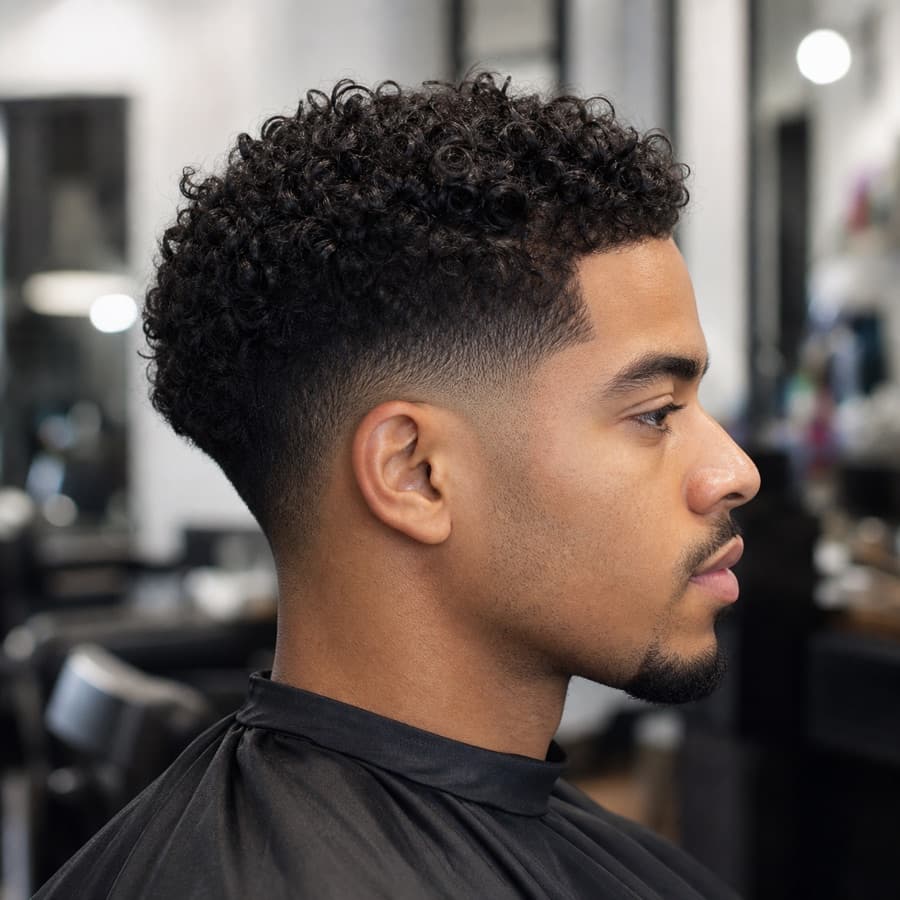
A low temple and neckline taper that keeps the sides clean while leaving enough curl height on top to show natural shape.
Illustrative only. Not a prediction or barber-reviewed reference.
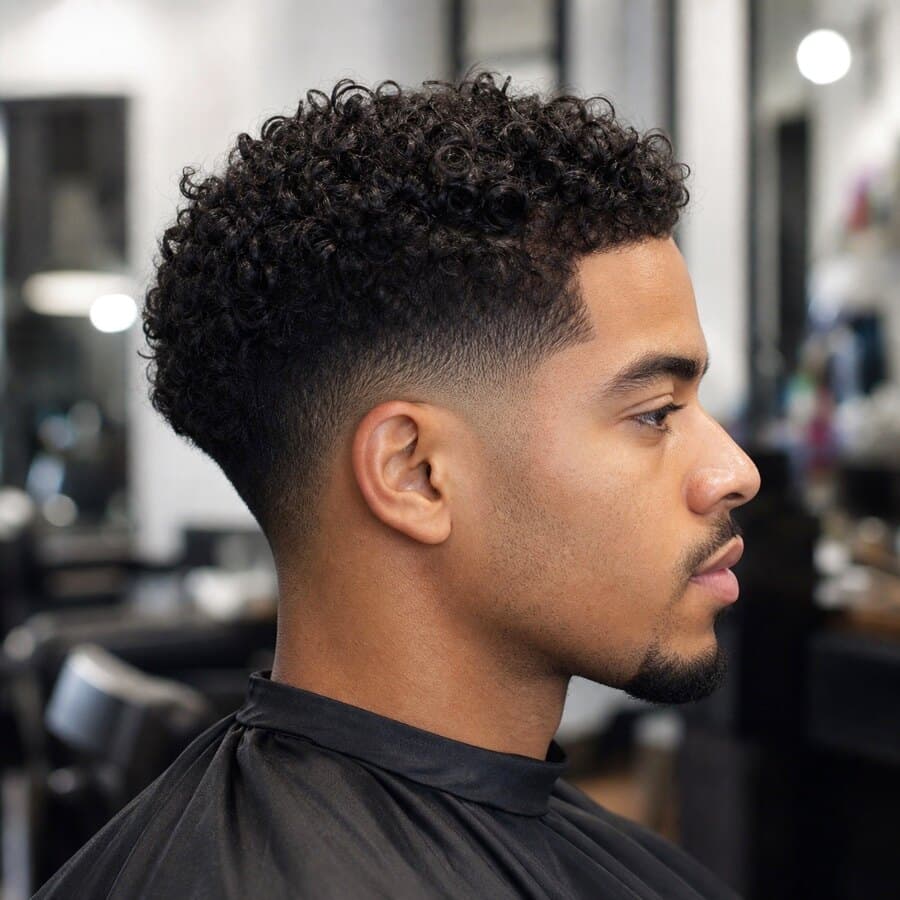
A curved ear-focused fade that lets curls stay full on top and through the back while cleaning the sides.
Illustrative only. Not a prediction or barber-reviewed reference.
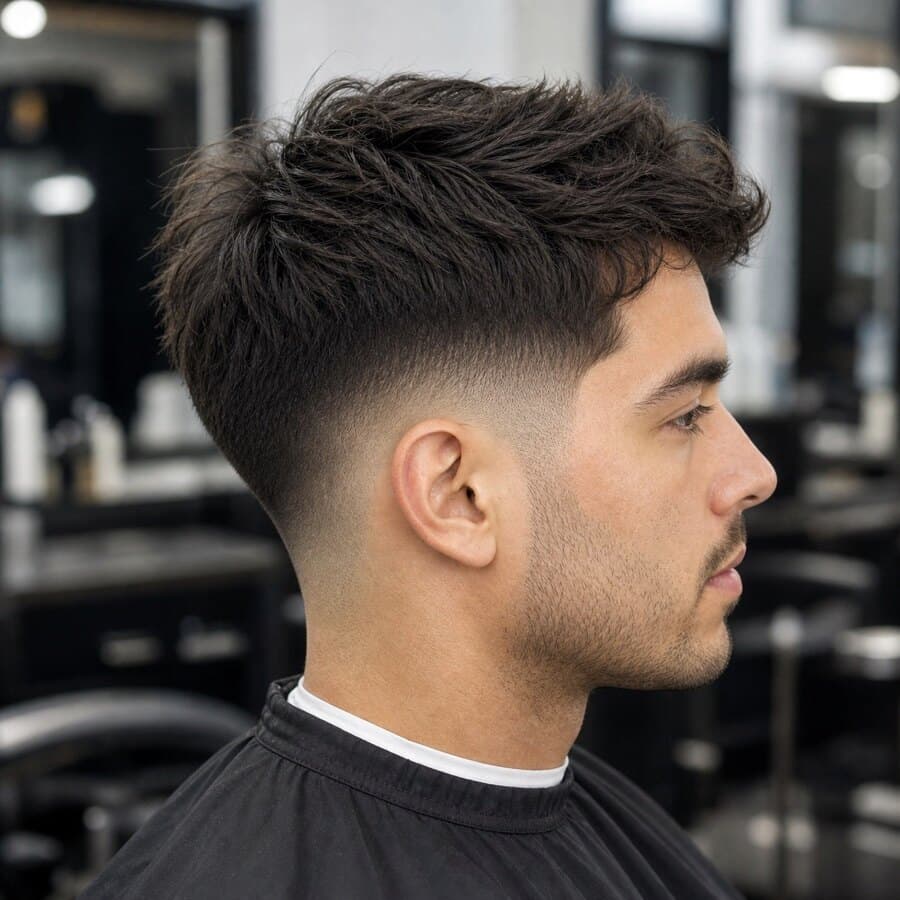
A textured fringe paired with a mid taper for more side contrast than the standard low taper version.
Illustrative only. Not a prediction or barber-reviewed reference.