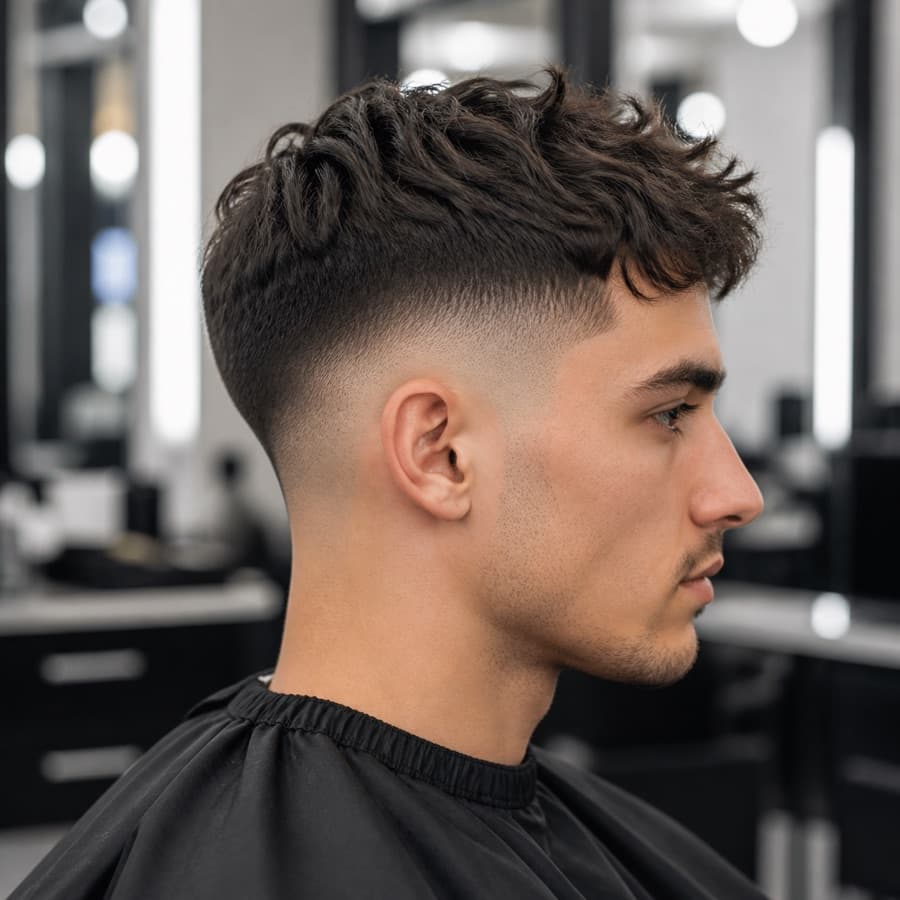
High Burst Fade
A bold burst fade with the arc pushed higher for more contrast around curls, crops, mohawks, or short textured tops.
Illustrative only. Not a prediction or barber-reviewed reference.
Fade guide
The blend starts near the top of the side, where the head begins to curve over, so almost the whole side and back are taken short. The highest-contrast placement, and the one where regrowth shows first.
Fade names vary between shops, and the reference images in this catalogue are generated illustrations — not barber-reviewed photos. Use this guide to start the conversation, then confirm the height and shortest point in person.
Where it sits
Side view. The fade starts near the top of the side and runs level around to the back, shortening down to a short stubble shadow.
Back view. A level band across the whole back, starting near the top of the side, fades down to a short stubble shadow at the neckline.
What it actually means
A high fade begins close to the top of the side of the head, at or just below the point where the side turns into the top (barbers often call it the parietal ridge or the crest). Everything below that line, which is nearly the whole side and back, is blended down from the longer top to a very short base.
The look is defined by contrast. With only the top left long, the outline of the haircut reads clearly from across a room and the top's texture, curls, or volume becomes the focal point. The same contrast means any regrowth or unevenness in the blend is easy to see.
A high fade under a very short top is close to the classic high and tight. Under a longer top it becomes the base for crops, pompadours, and high-top shapes, where the tight sides make the top look taller.
Compare related fades
vs Mid fade
A mid fade starts around the temple and keeps the upper side long, so the contrast is softer and the grow-out gentler.
vs High taper
A high taper uses a similar height but keeps a softer, more natural edge at the bottom instead of going to near-skin.
vs Bald fade
A bald fade describes a fully shaved base. A high bald fade combines that finish with this placement, the boldest common combination.
Catalogue references
Every card below uses a generated illustration with visible labels. Open one for barber wording and upkeep notes, or take it straight into a brief.
The catalogue has no record labelled as a plain high fade yet. These references share the high placement or show the taper version for comparison.

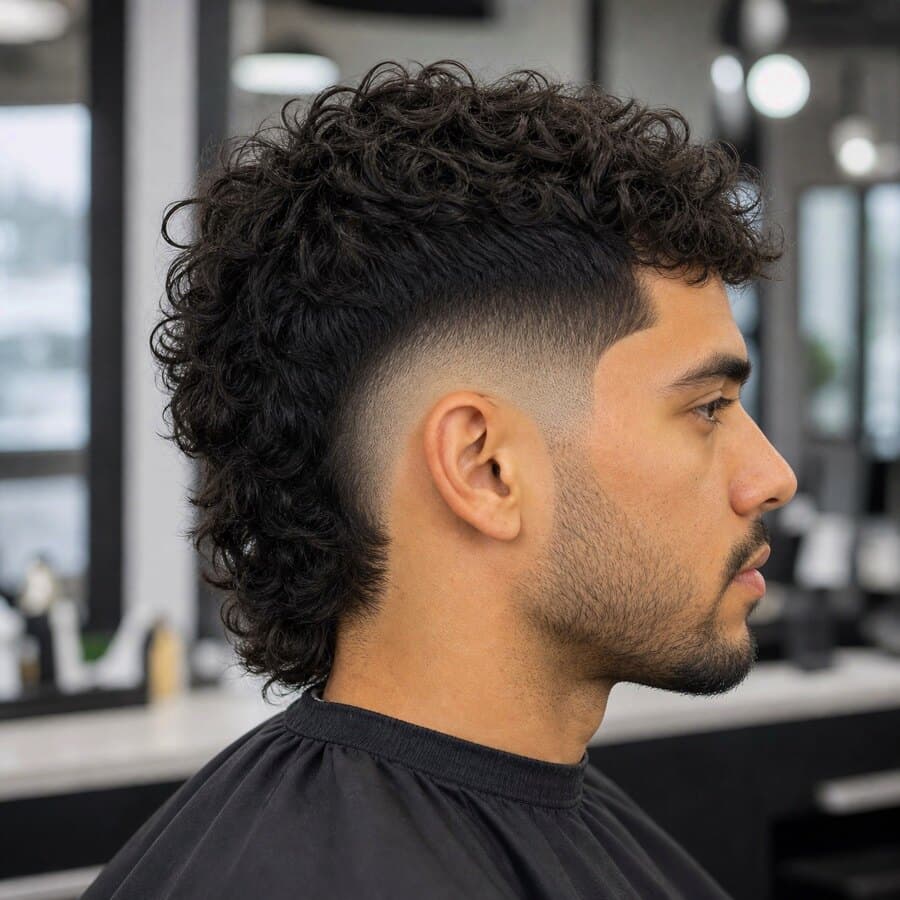
A bold burst fade with the arc pushed higher for more contrast around curls, crops, mohawks, or short textured tops.
Illustrative only. Not a prediction or barber-reviewed reference.

A sharper taper with the fade pushed higher on the side, giving a cleaner and more athletic profile.
Illustrative only. Not a prediction or barber-reviewed reference.

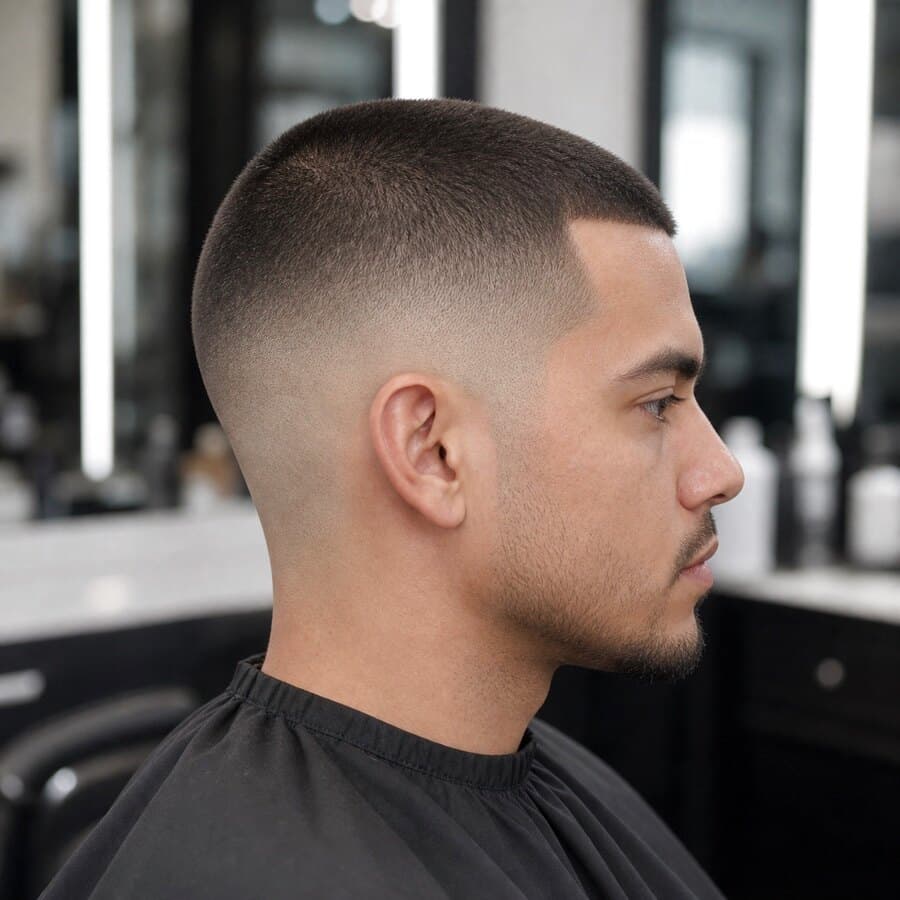
A general fade buzz cut for people deciding between low, mid, high, skin, and taper versions.
Illustrative only. Not a prediction or barber-reviewed reference.
Quick answers
Answers reflect common usage, not universal standards. Your barber's wording wins any disagreement.
Not quite. A high and tight is a high fade under a very short top, the classic military-style cut. A high fade can sit under any top length, from a short crop to a tall curly top.
A high fade. Its line sits near the top of the side, so a much taller band is short. A mid fade keeps the upper side long, so it shows less scalp and softens more slowly as it grows.
More often than a low or mid fade, because the contrast is the feature and regrowth softens it quickly. People who want it sharp often rebook every one to two weeks.