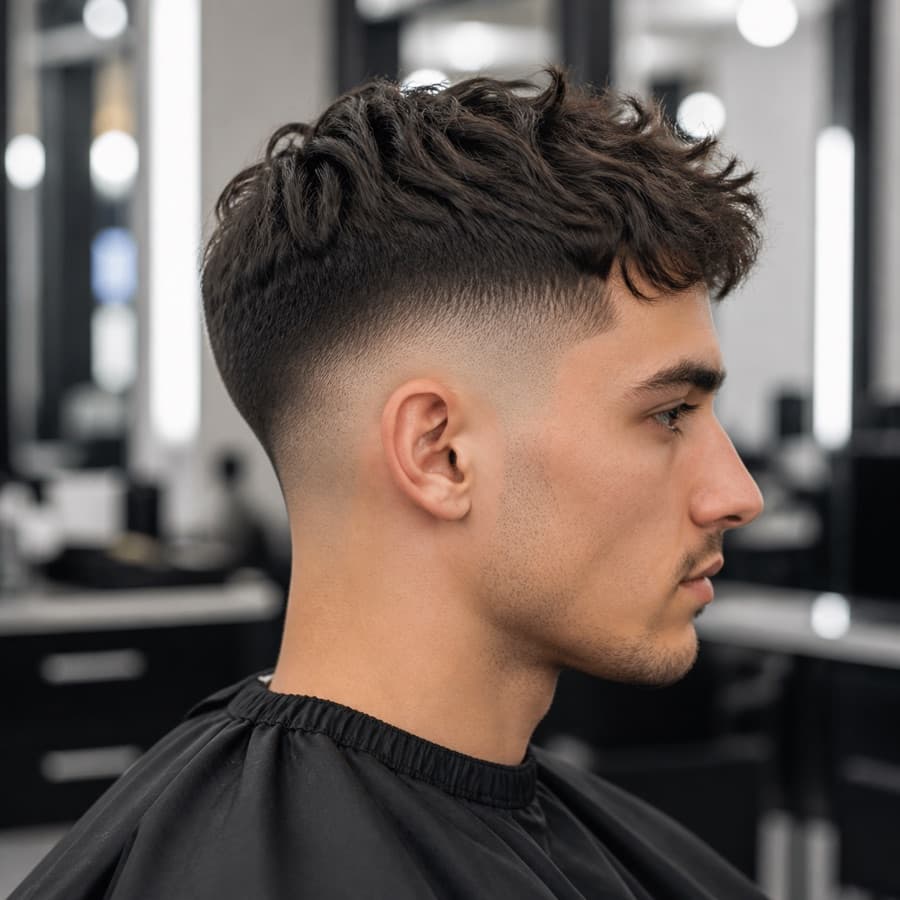
Generated illustrationhigh fade
Frequent upkeepstraight + wavy
High Taper Fade
A sharper taper with the fade pushed higher on the side, giving a cleaner and more athletic profile.
Illustrative only. Not a prediction or barber-reviewed reference.
Fade guide
The blend starts near the top of the side, so most of the area above the ear is taken short. A bold taper placement whose contrast can make regrowth noticeable sooner.
Fade names vary between shops, and the reference images in this catalogue are generated illustrations — not barber-reviewed photos. Use this guide to start the conversation, then confirm the height and shortest point in person.
What it actually means
A high taper fade begins the blend close to the top of the side of the head. Only a narrow band of length survives above the ear, which makes the outline crisp and helps any texture on top stand out.
Compared with a mid taper, the defining change is exposure: more scalp shows through the sides, and the haircut reads clearly even from across a room. That same exposure is what makes regrowth obvious quickly.
High tapers are common with textured crops, blowout tops, and athletic shapes where the contrast between tight sides and a fuller top is the point of the haircut.
Compare related fades
vs Mid taper
A mid taper keeps more length above the ear. Moving from mid to high trades coverage for contrast.
vs Skin fade
A skin fade describes the bare-skin finish at the base. A high taper can end in skin or stubble — they are separate choices.
vs Bald fade
A bald fade removes visible stubble entirely. A high taper that ends in stubble will grow back looking softer within days.
Catalogue references
Every card below uses a generated illustration with visible labels. Open one for barber wording and upkeep notes, or take it straight into a brief.
A sharper taper with the fade pushed higher on the side, giving a cleaner and more athletic profile.
Illustrative only. Not a prediction or barber-reviewed reference.
Quick answers
Answers reflect common usage, not universal standards. Your barber's wording wins any disagreement.
No. High refers to where the blend starts, not where it ends. A high taper can finish in bare skin, short stubble, or a natural taper — confirm the endpoint separately.
It can make curl definition on top more noticeable. Because a high placement removes more side weight, agree on the height before the first pass.
Faster-looking than lower placements because any regrowth breaks the sharp outline. People who choose this height usually accept more frequent touch-ups as part of the style.