Generated illustrationLow taper
Regular upkeepstraight + wavy
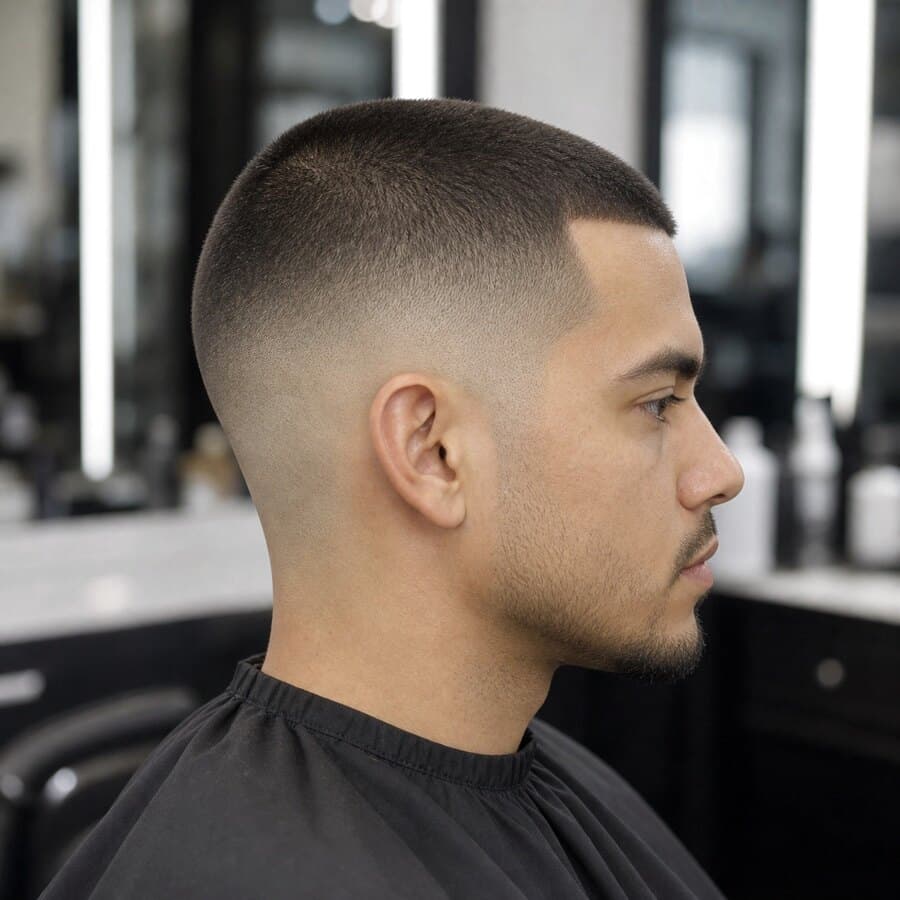
Buzz Cut Low Fade
A buzz cut with the fade kept low, giving a cleaner edge without exposing as much of the side.
Illustrative only. Not a prediction or barber-reviewed reference.
Fade guide
The blend starts at about the top of the ear and wraps around the back just above the neckline. The sides and back get visibly shorter while most of the side keeps its length: the lowest full fade.
Fade names vary between shops, and the reference images in this catalogue are generated illustrations — not barber-reviewed photos. Use this guide to start the conversation, then confirm the height and shortest point in person.
Where it sits
Side view. The fade starts at about the top of the ear and runs level around to the back, shortening down to a short stubble shadow.
Back view. A level band across the whole back, starting at about the top of the ear, fades down to a short stubble shadow at the neckline.
What it actually means
A low fade is a full, wrap-around fade placed low on the head. The line where the blend begins sits at roughly the top of the ear and carries on around the back of the head at about the same height, a little above the neckline. Below that line the hair is taken progressively shorter, often down to very short stubble or skin.
Coverage is what separates it from a low taper. A low taper only works the edges, the sideburns and the neckline corners, and leaves the hair above and behind the ear at its normal length. A low fade takes that whole lower band short, so from the side and the back you see a clear gradient rather than just tidy edges.
Because the short band is low, most of the side above the ear keeps its length. From the front the haircut changes less than with a mid or high fade, which is why the low fade is the usual starting point for anyone trying a full fade for the first time.
Compare related fades
vs Low taper
A low taper only shortens the sideburns and neckline. A low fade carries that shortness all the way around the back in one band.
vs Mid fade
A mid fade starts higher, around the temple, so more of the side is short and more scalp shows.
vs Drop fade
A drop fade starts at a similar height in front but curves down behind the ear toward the nape instead of running level.
Catalogue references
Every card below uses a generated illustration with visible labels. Open one for barber wording and upkeep notes, or take it straight into a brief.
The catalogue has no record labelled as a plain low fade yet. These references use the same low height with a buzz top, a drop, or a burst shape.
A buzz cut with the fade kept low, giving a cleaner edge without exposing as much of the side.
Illustrative only. Not a prediction or barber-reviewed reference.
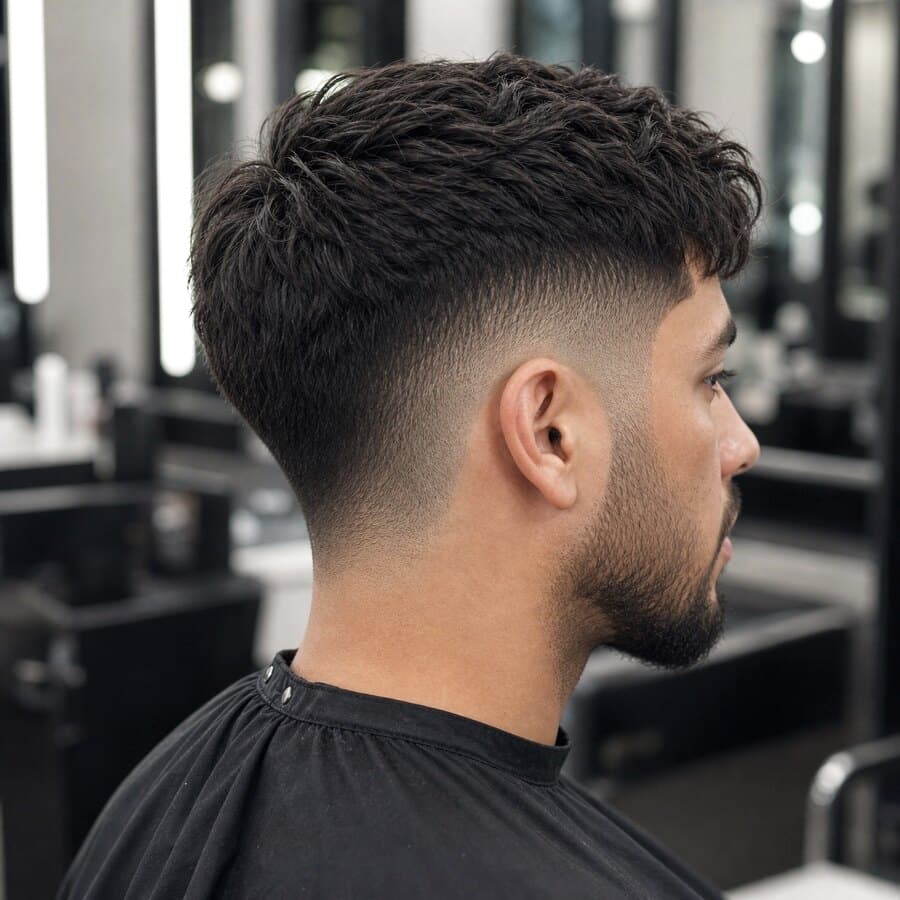
A low fade that dips behind the ear, following the head shape while keeping the overall haircut conservative.
Illustrative only. Not a prediction or barber-reviewed reference.
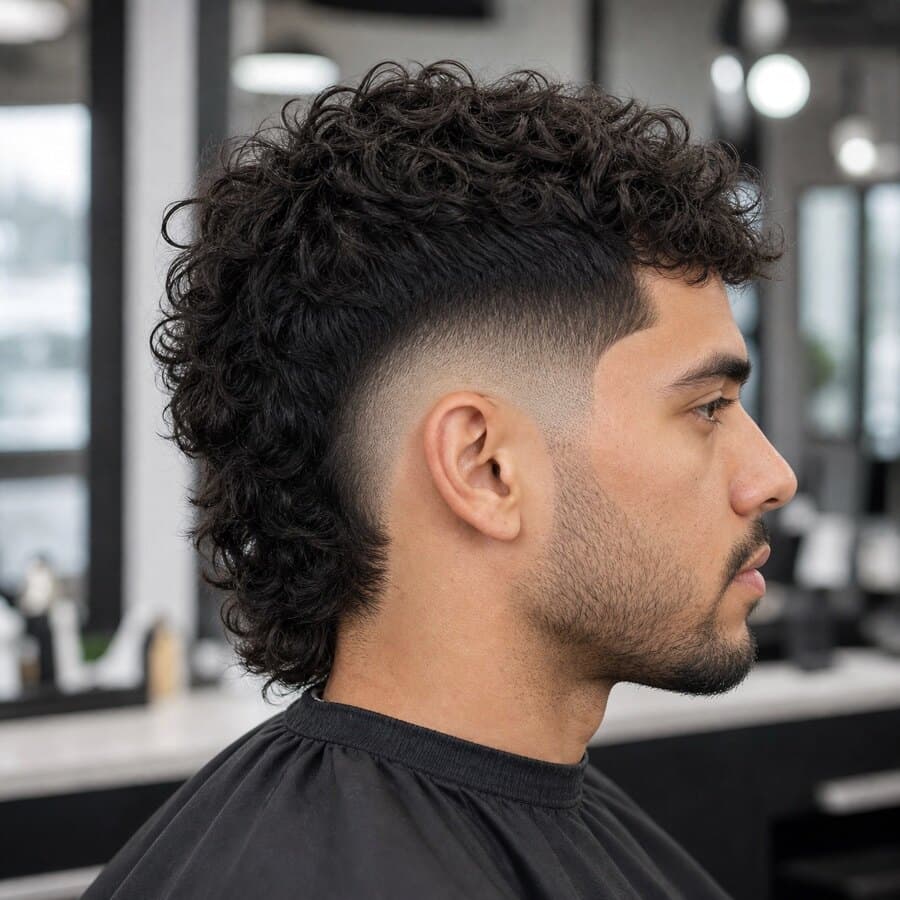
A softer burst fade that keeps the arc low around the ear, useful when you want shape without a dramatic high fade.
Illustrative only. Not a prediction or barber-reviewed reference.
Quick answers
Answers reflect common usage, not universal standards. Your barber's wording wins any disagreement.
No, although shops blur the terms. A low taper tidies only the sideburns and neckline. A low fade takes a full band around the sides and back short, starting at about the top of the ear. If you are unsure which you mean, say where the shortness should stop and whether it wraps around the back.
There is no fixed recipe. A low fade usually starts at skin, a #0 or a #½ at the bottom and steps up through the guards to somewhere around a #2 to #4 where it meets the longer hair. Wahl's own guidance is that most fades use a combination of #0 to #4 guards; the haircut numbers chart shows how long each one leaves the hair.
A mid fade. Its line starts around the temple, so a taller band of the side is taken short. A low fade keeps more length above the ear, so it shows less scalp and grows out with less contrast.