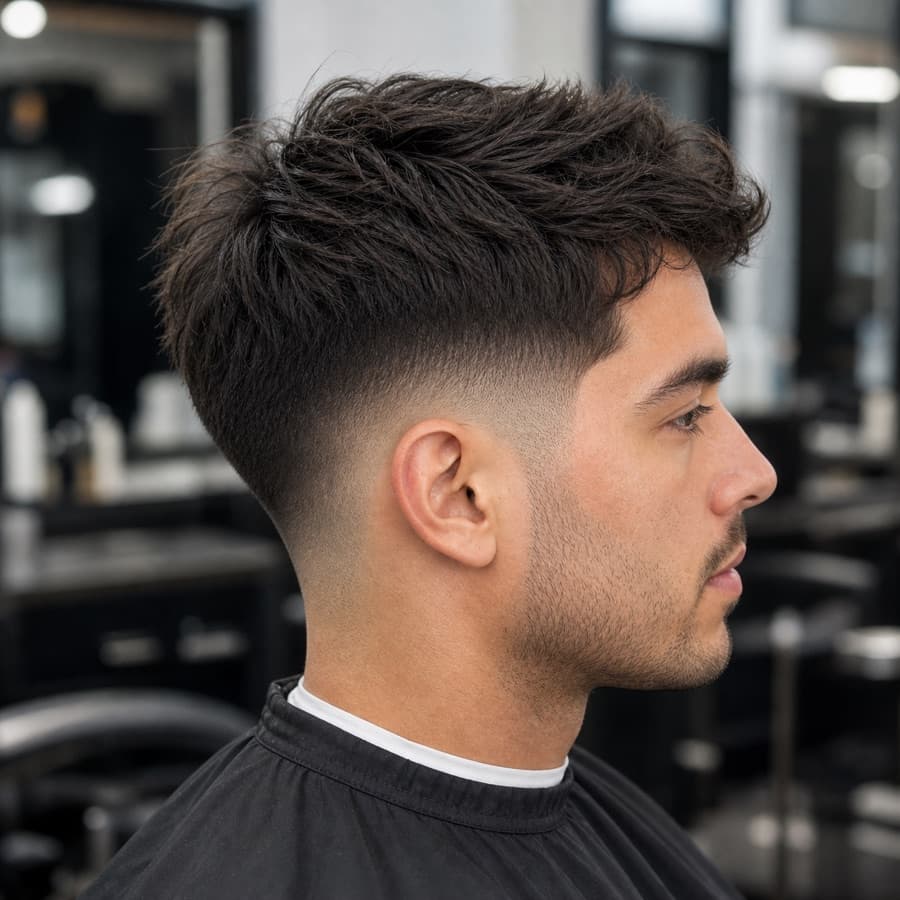
Generated illustrationmid fade
Regular upkeepstraight + wavy
Mid Taper Fade
A balanced taper that starts higher than a low taper, giving more contrast while staying wearable.
Illustrative only. Not a prediction or barber-reviewed reference.
Fade guide
The transition starts around temple level, between a conservative edge cleanup and a high-contrast fade. Visible structure without going all the way up the side.
Fade names vary between shops, and the reference images in this catalogue are generated illustrations — not barber-reviewed photos. Use this guide to start the conversation, then confirm the height and shortest point in person.
What it actually means
A mid taper fade places the start of the blend roughly between the top of the sideburn and the temple. The lower half of the side gets tight while the upper half keeps its length, which makes the contrast clearly visible from a normal conversational distance.
It is the middle option by design: more structured than a low taper, less exposed than a high taper or skin fade. People often choose it when a low taper felt too subtle but they do not want scalp showing through the side.
Because the blend covers more vertical space, quality shows in the gradient itself. A smooth mid taper has no visible weight line where the blending stops.
Compare related fades
vs Low taper
A low taper keeps the cleanup below the temple. The mid version climbs higher and reads sharper from the front.
vs High taper
A high taper starts near the top of the side. If a mid taper still feels too subtle, the high placement is the next step.
vs Drop fade
A drop fade bends the fade line behind the ear. Mid placement can be combined with a drop for a curved profile.
Catalogue references
Every card below uses a generated illustration with visible labels. Open one for barber wording and upkeep notes, or take it straight into a brief.
A balanced taper that starts higher than a low taper, giving more contrast while staying wearable.
Illustrative only. Not a prediction or barber-reviewed reference.
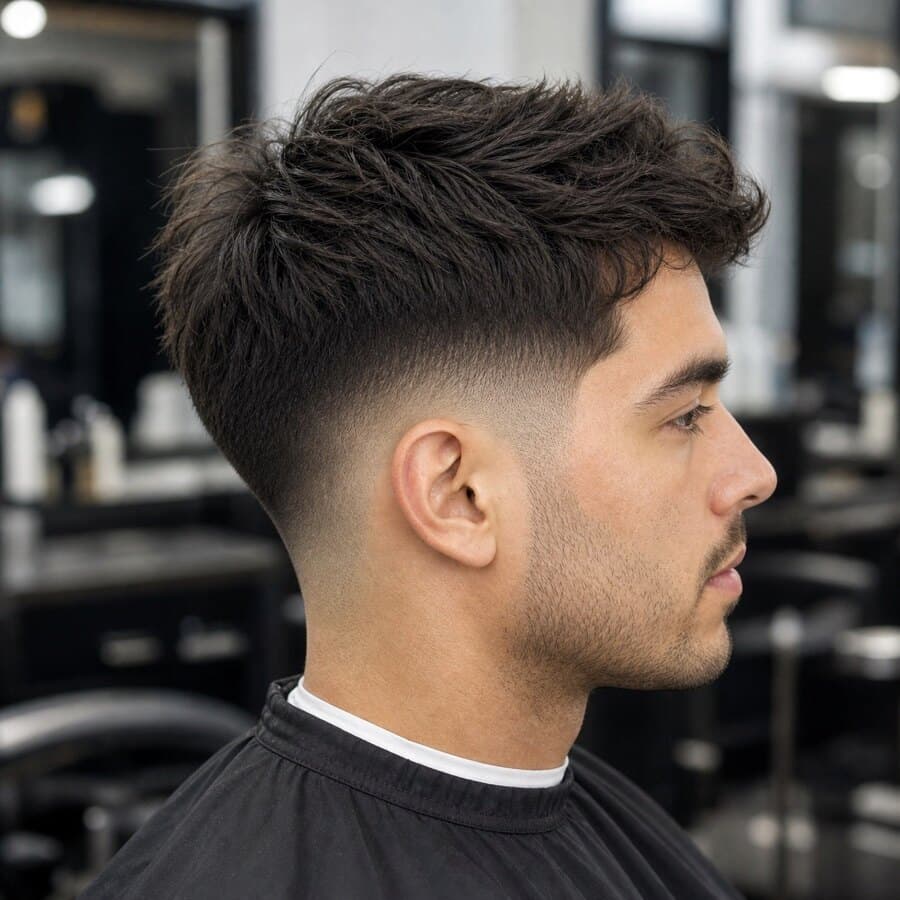
A textured fringe paired with a mid taper for more side contrast than the standard low taper version.
Illustrative only. Not a prediction or barber-reviewed reference.
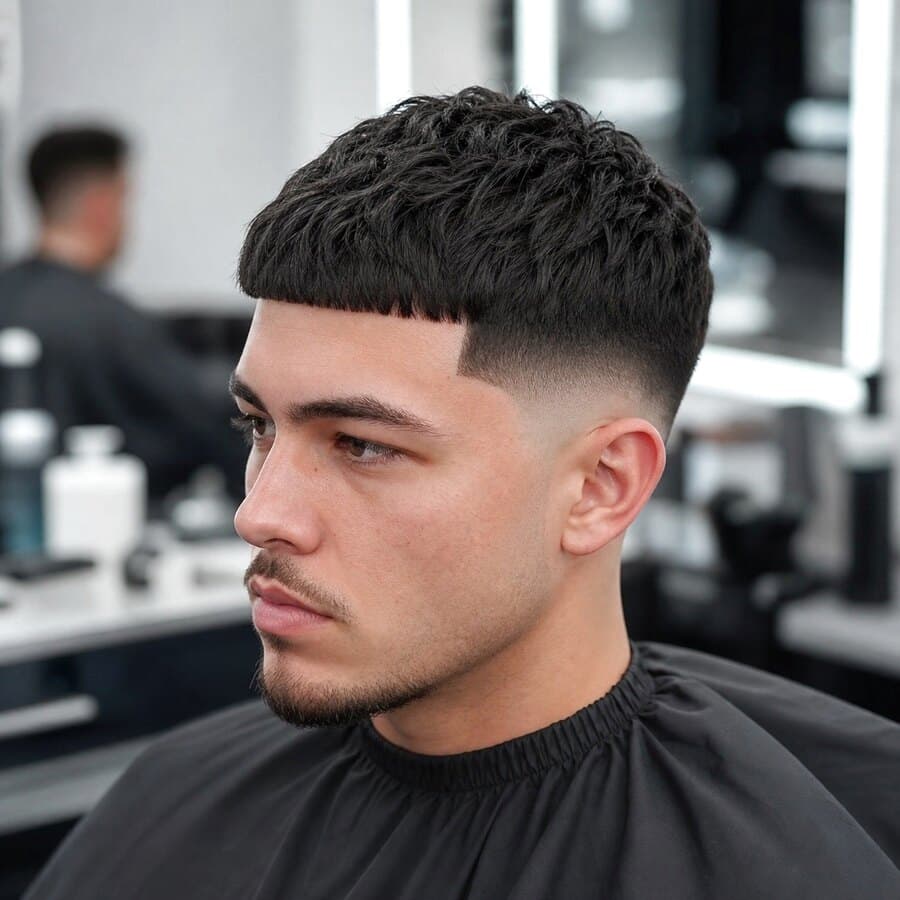
An Edgar crop with a mid taper for extra contrast through the sides while keeping the front edge strong.
Illustrative only. Not a prediction or barber-reviewed reference.
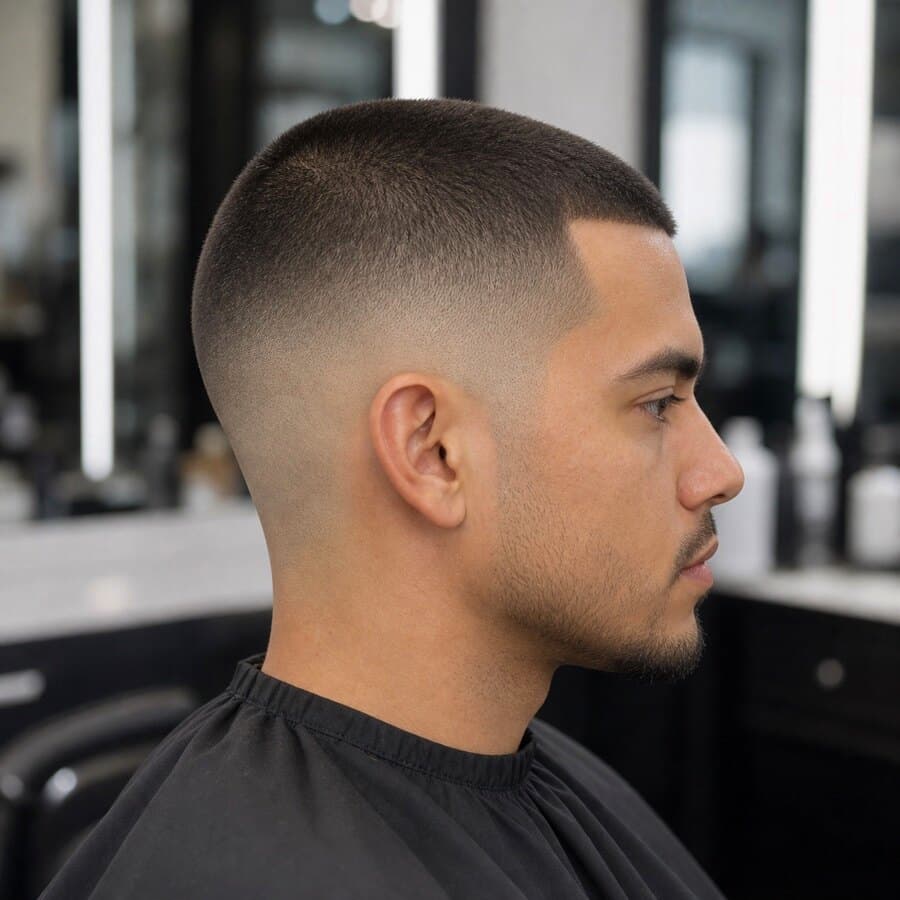
A buzz cut with a mid fade that creates stronger side contrast while keeping the top simple.
Illustrative only. Not a prediction or barber-reviewed reference.
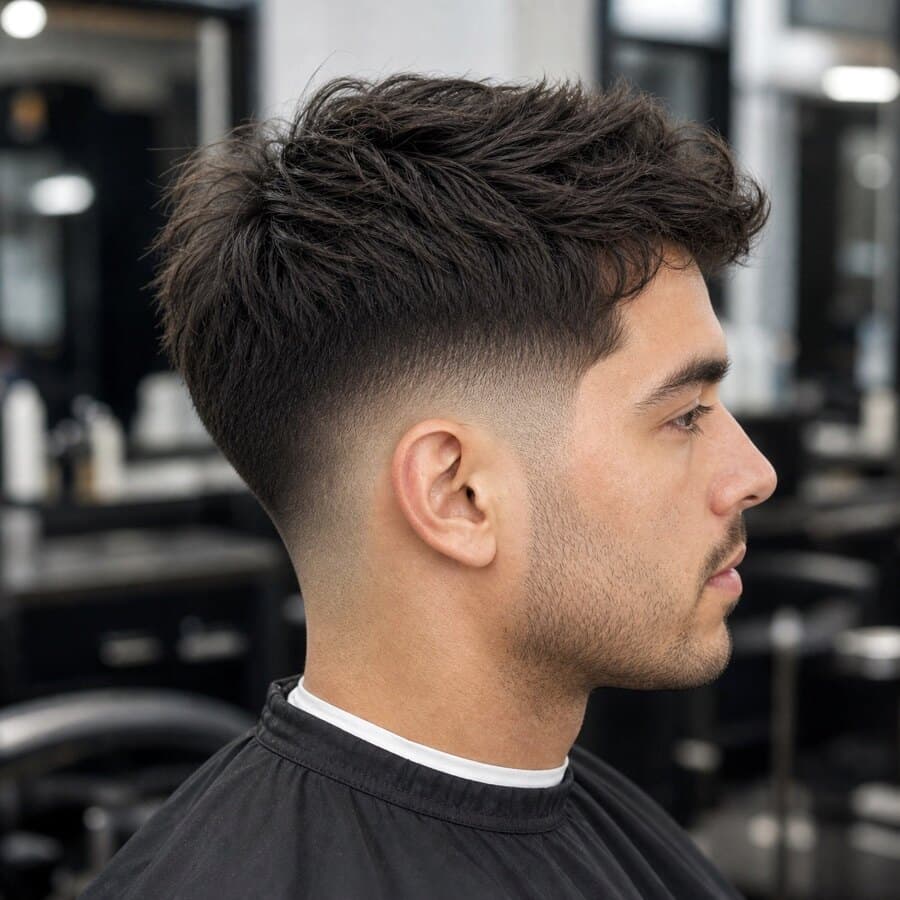
A mid taper adapted for straight hair, adding more side contrast while relying on dry blending to avoid visible lines.
Illustrative only. Not a prediction or barber-reviewed reference.
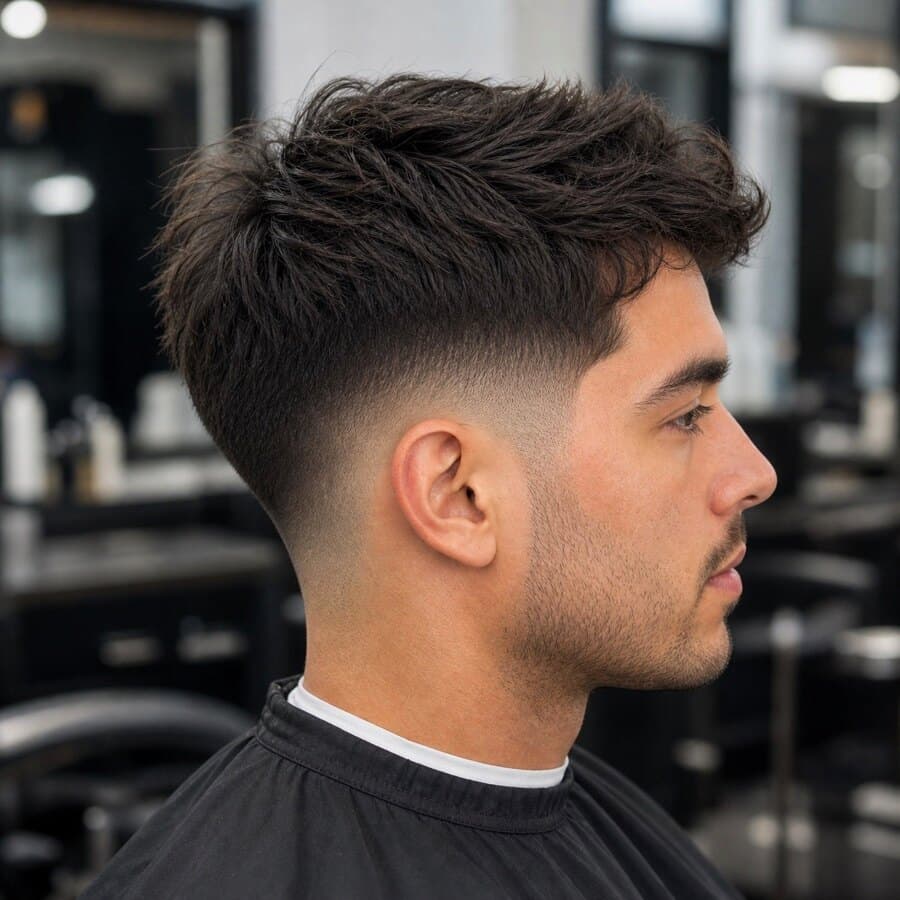
A mid taper for curls that gives more visible side cleanup than a low taper while preserving curl height.
Illustrative only. Not a prediction or barber-reviewed reference.
Quick answers
Answers reflect common usage, not universal standards. Your barber's wording wins any disagreement.
Around temple level, though shops vary slightly. Pointing to the spot on your own head is more reliable than relying on the name alone.
It can be, because the higher blend shows off curl shape on top. Ask that enough length remain above the blend so the curls are not squeezed into the faded area.
More often than a low taper because the visible contrast dulls as hair grows. Many people book touch-ups every two to four weeks depending on growth speed.