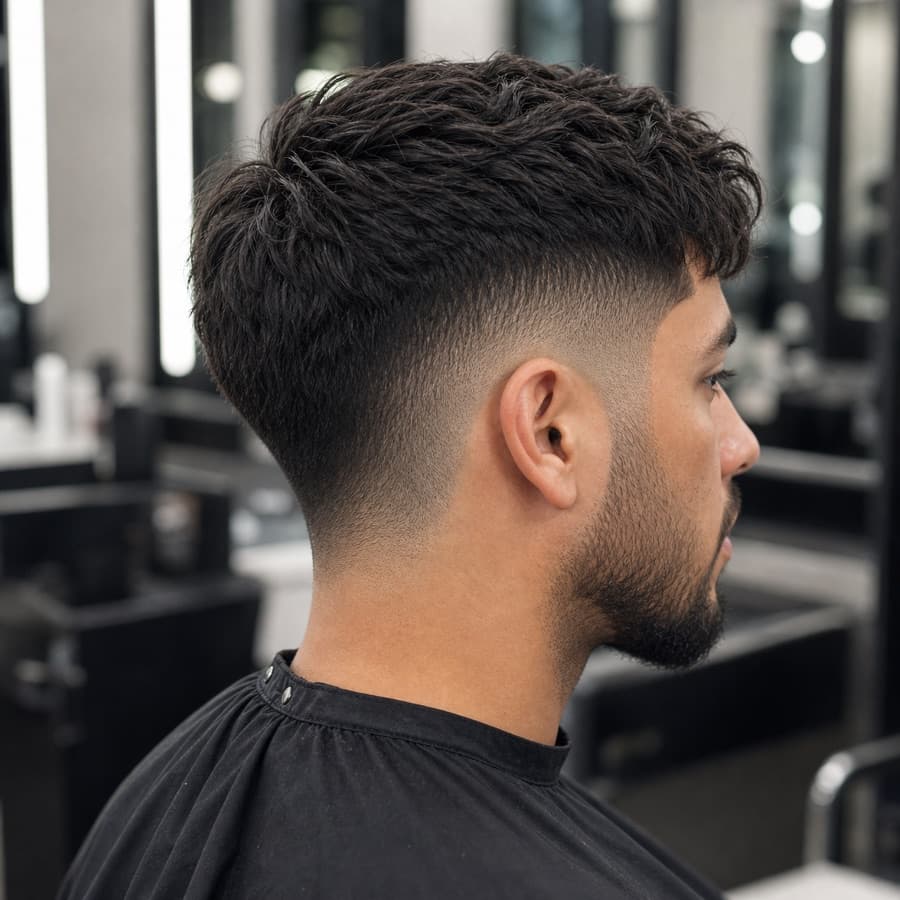
Generated illustrationdrop fade
Regular upkeepstraight + wavy
Drop Fade
A fade that drops lower behind the ear, following the head shape for a curved, more sculpted silhouette.
Illustrative only. Not a prediction or barber-reviewed reference.
Fade guide
The fade line drops behind the ear, following the curve of the head so the shortest point sits lower at the nape than at the temple. A curved profile that keeps weight balanced around the ear.
Fade names vary between shops, and the reference images in this catalogue are generated illustrations — not barber-reviewed photos. Use this guide to start the conversation, then confirm the height and shortest point in person.
What it actually means
A drop fade gets its name from what the fade line does behind the ear: instead of staying level, it arcs down with the head's natural curve, reaching its lowest point toward the nape. From the side, the transition looks like a gentle dip rather than a horizontal band.
The shape matters because heads are not flat. A straight fade can look too high behind the ear or leave an awkward patch of length at the nape; dropping the line follows the anatomy so both the temple and nape read clean.
Drop fades are often chosen for tops with volume — blowouts, curls, middle parts — because the sides tighten without forcing the barber to take everything high. The contrast concentrates lower on the head.
Compare related fades
vs Burst fade
Both are curved, but a burst radiates around the ear while a drop follows the head's curvature downward at the back.
vs Low taper
A low taper keeps a level cleanup near the neckline. A drop bends that same idea into a curve.
vs Mid taper
Mid describes height; drop describes the path of the line. A mid drop fade is a common combination.
Catalogue references
Every card below uses a generated illustration with visible labels. Open one for barber wording and upkeep notes, or take it straight into a brief.
A fade that drops lower behind the ear, following the head shape for a curved, more sculpted silhouette.
Illustrative only. Not a prediction or barber-reviewed reference.
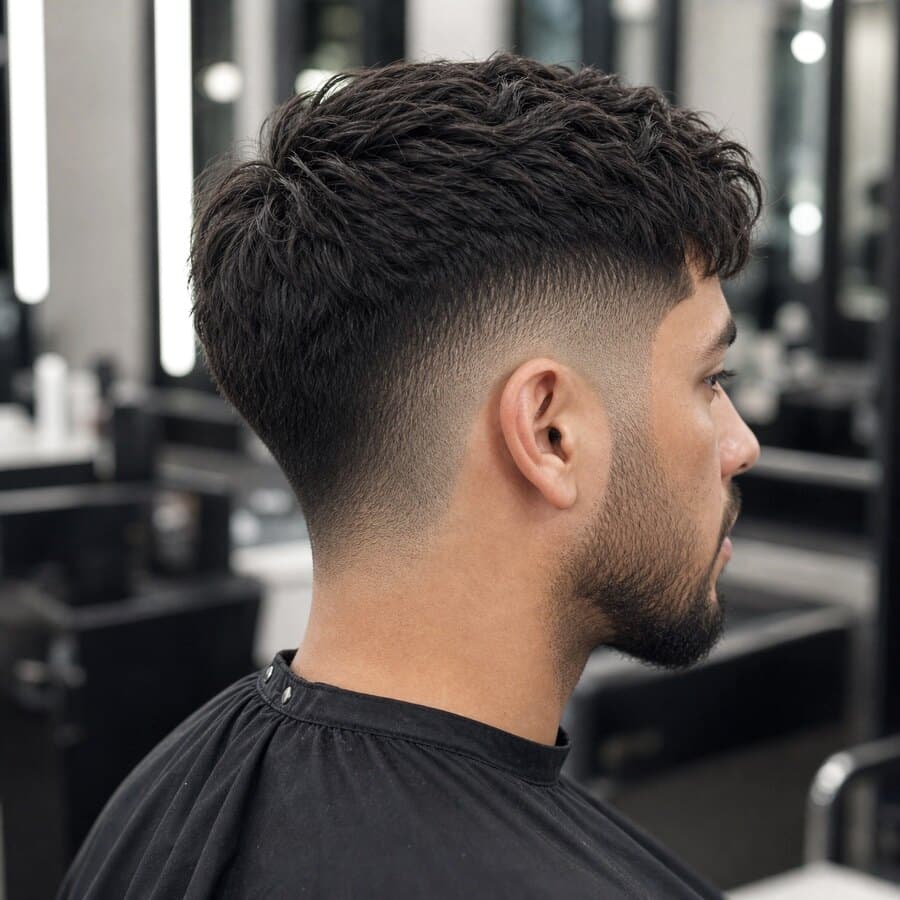
A low fade that dips behind the ear, following the head shape while keeping the overall haircut conservative.
Illustrative only. Not a prediction or barber-reviewed reference.
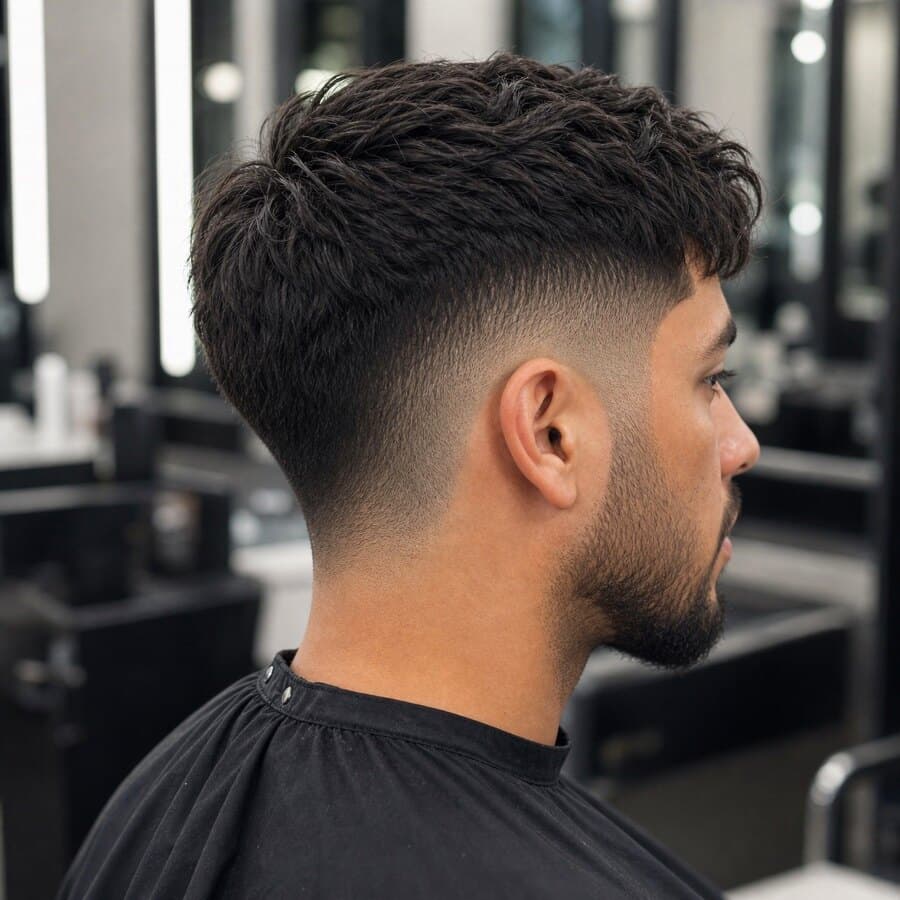
A more visible drop fade that sits around the middle of the side and curves lower toward the back.
Illustrative only. Not a prediction or barber-reviewed reference.
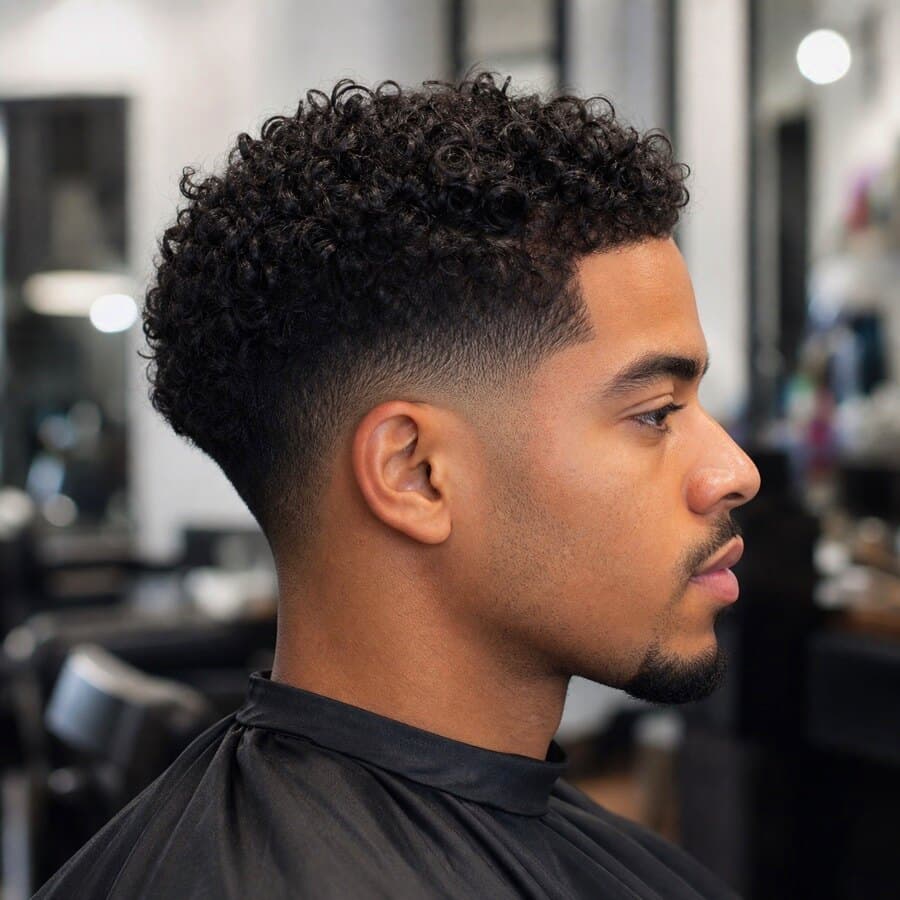
A curved drop fade that removes side bulk while letting curls keep height and shape on top.
Illustrative only. Not a prediction or barber-reviewed reference.
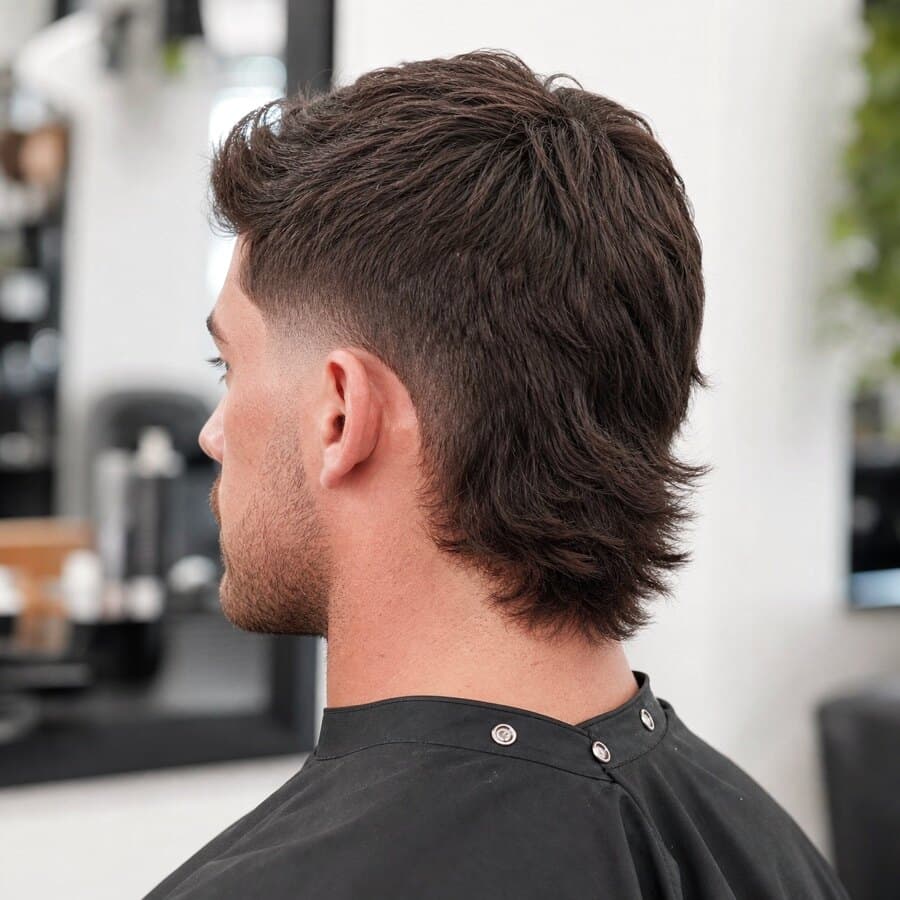
A mullet shape with a drop fade that follows the head into the back instead of using a tight burst around the ear.
Illustrative only. Not a prediction or barber-reviewed reference.
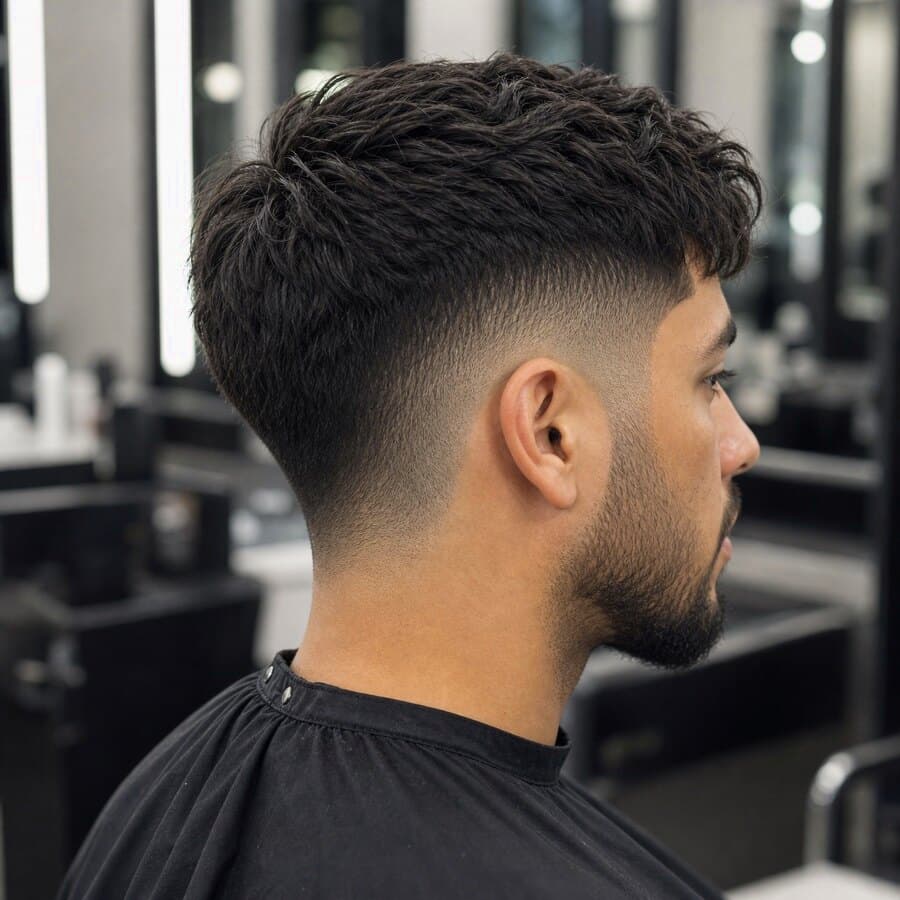
A buzz cut with a drop fade that curves behind the ear for more shape than a straight fade.
Illustrative only. Not a prediction or barber-reviewed reference.
Quick answers
Answers reflect common usage, not universal standards. Your barber's wording wins any disagreement.
The path of the fade line. It stays level in a regular fade and dips behind the ear in a drop fade, following the head's curve so the lowest point lands near the nape.
It is one of the better pairings. The dropped line tightens the sides without cutting high into them, which keeps longer top shapes balanced.
No more than other fades of similar height. The visible edge softens as hair grows like any fade; the curve itself simply changes where regrowth shows first.
Continue comparing