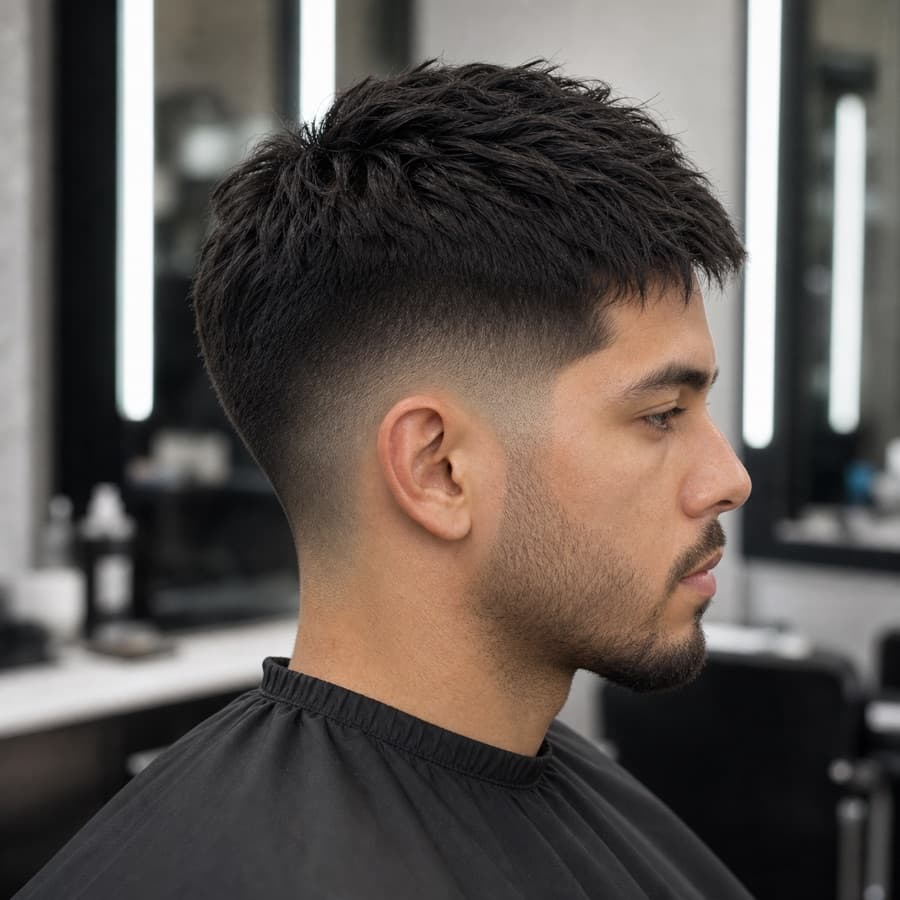
Generated illustrationshadow fade
Lower upkeepstraight + wavy
Shadow Fade
A softer fade that keeps a visible shadow rather than going to bare skin, giving a more conservative finish.
Illustrative only. Not a prediction or barber-reviewed reference.
Fade guide
A fade whose shortest point stops just short of skin, leaving a dark shadow of stubble. Most of the contrast of a skin fade with a gentler grow-out and a more forgiving schedule.
Fade names vary between shops, and the reference images in this catalogue are generated illustrations — not barber-reviewed photos. Use this guide to start the conversation, then confirm the height and shortest point in person.
What it actually means
A shadow fade blends the sides so the shortest point retains a fine layer of stubble — enough to see shadow through it, not enough to feel long. The transition mimics a skin fade's gradient but never quite reaches bare skin.
That single guard-length difference changes the whole maintenance story. Regrowth softens the look gradually instead of breaking a bare-skin finish within days, so time between cuts stretches further.
People often pick a shadow fade after their first skin fade: they liked the structure but found the upkeep pace or the exposed feeling did not suit their routine or workplace.
Compare related fades
vs Skin fade
A skin fade ends at bare skin; a shadow fade stops one step earlier at visible stubble. That step is the entire difference.
vs Bald fade
A bald fade removes stubble entirely. A shadow fade deliberately keeps it — asking for one when you meant the other reverses the outcome.
vs Low taper
Placement and endpoint are separate choices. A shadow finish can sit low, mid, or high like any other fade.
Catalogue references
Every card below uses a generated illustration with visible labels. Open one for barber wording and upkeep notes, or take it straight into a brief.
A softer fade that keeps a visible shadow rather than going to bare skin, giving a more conservative finish.
Illustrative only. Not a prediction or barber-reviewed reference.
Quick answers
Answers reflect common usage, not universal standards. Your barber's wording wins any disagreement.
Usually yes at the base — a shadow fade keeps its shortest point near stubble length, while a classic taper feathers into the hairline. Placement can still vary.
Only the final step. A skin fade takes the base to bare skin; a shadow fade stops at visible stubble, which softens both the look and the maintenance cycle.
Someone who wants visible fade contrast without taking the endpoint to bare skin may prefer it. Ask to compare a shadow and skin finish before deciding.
Continue comparing