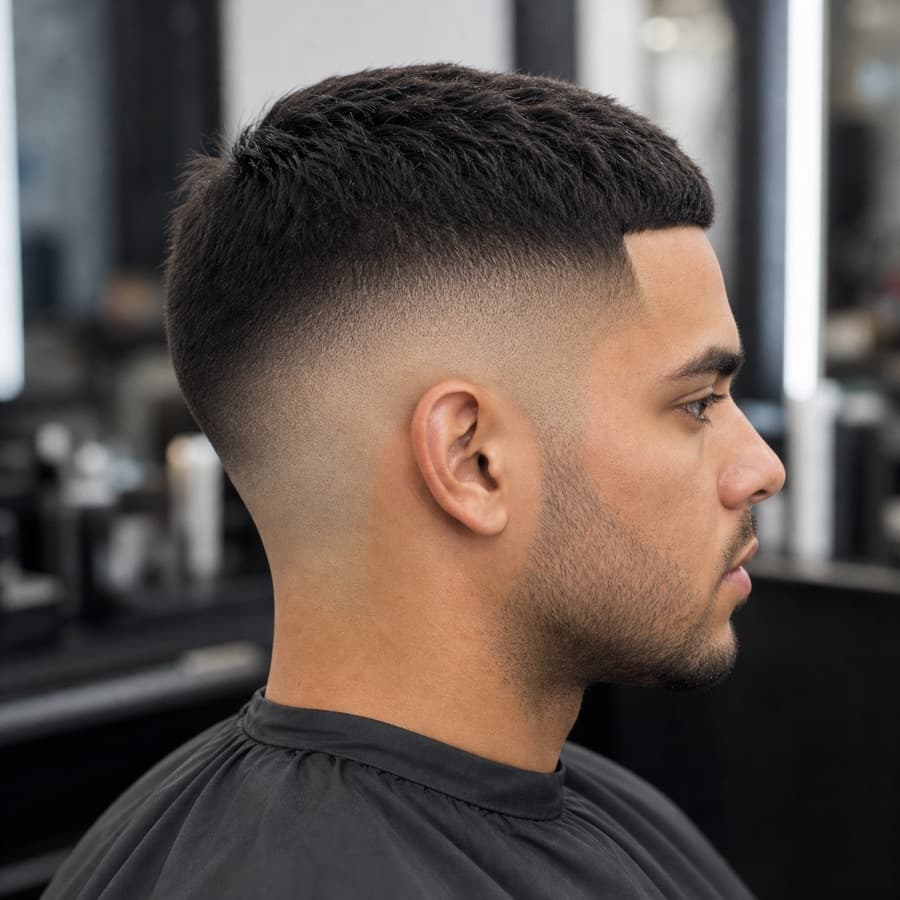
Generated illustrationskin fade
Frequent upkeepstraight + wavy
Skin Fade
A high-contrast fade blended down to bare skin, with a sharp finish and frequent upkeep.
Illustrative only. Not a prediction or barber-reviewed reference.
Fade guide
“Skin” describes the shortest point, not the height: the fade blends all the way down to bare skin before meeting the outline. Maximum contrast and the most demanding upkeep.
Fade names vary between shops, and the reference images in this catalogue are generated illustrations — not barber-reviewed photos. Use this guide to start the conversation, then confirm the height and shortest point in person.
What it actually means
A skin fade is any fade whose shortest point goes down to bare skin, usually finished with a razor or a zero-gap trimmer. The word describes the endpoint of the blend — a skin fade can be placed low, mid, or high on the side.
The look depends on a smooth transition from bare skin into stubble and then into longer hair. Because there is no guard-length buffer at the bottom, small errors in blending show immediately, which is why the cut is considered a precision request.
Skin fades read sharpest in the first days after the cut. As soon as stubble regrows, the lowest section softens — which some people like, but it is not the crisp version they asked for.
Compare related fades
vs Shadow fade
A shadow fade stops at a visible whisper of stubble instead of bare skin, giving a softer grow-out.
vs Low taper
A low taper keeps a natural tapered edge. Adding a skin endpoint turns the same placement into a much sharper request.
vs Bald fade
Many shops treat “skin” and “bald” as synonyms. Some reserve “bald” for a wider fully shaved area — confirm what yours means.
Catalogue references
Every card below uses a generated illustration with visible labels. Open one for barber wording and upkeep notes, or take it straight into a brief.
A high-contrast fade blended down to bare skin, with a sharp finish and frequent upkeep.
Illustrative only. Not a prediction or barber-reviewed reference.
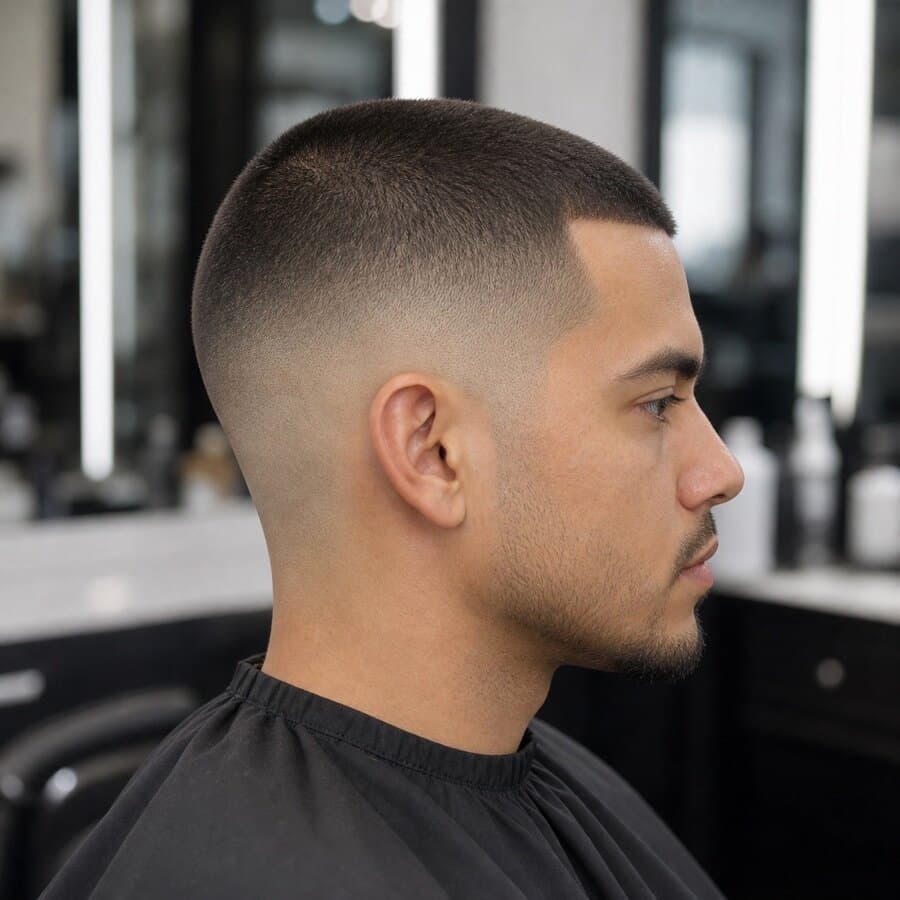
A short buzz cut blended into a fade, built for a clean low-maintenance top and a sharp perimeter.
Illustrative only. Not a prediction or barber-reviewed reference.
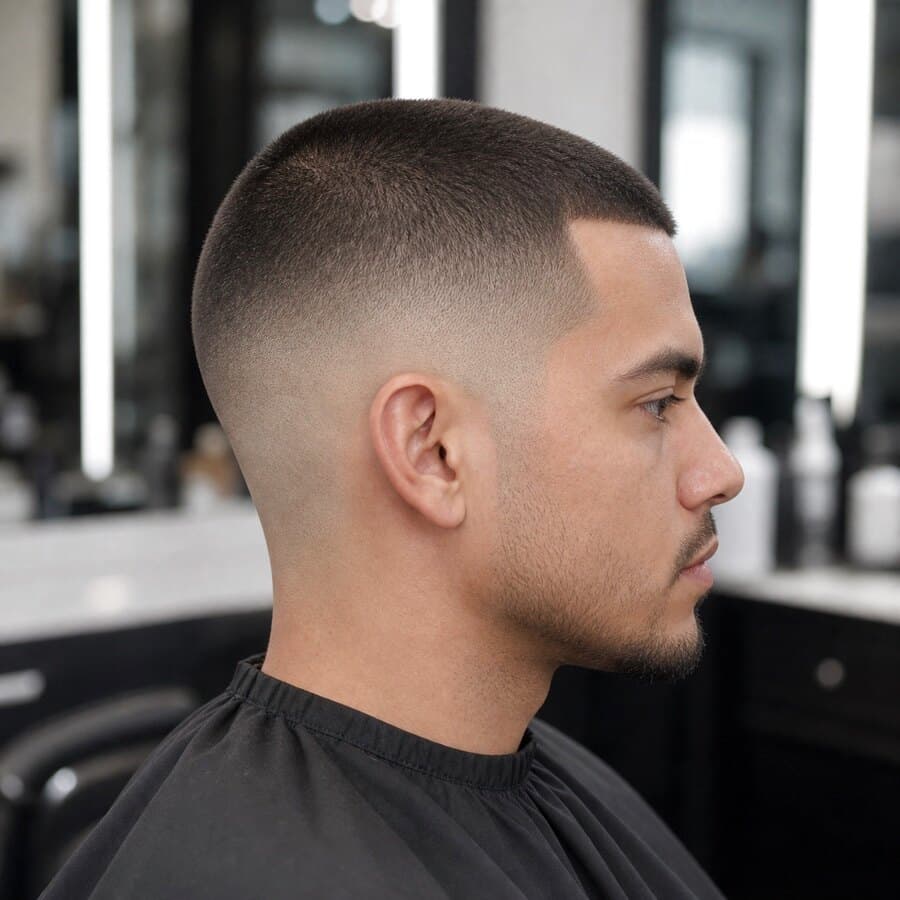
A general fade buzz cut for people deciding between low, mid, high, skin, and taper versions.
Illustrative only. Not a prediction or barber-reviewed reference.
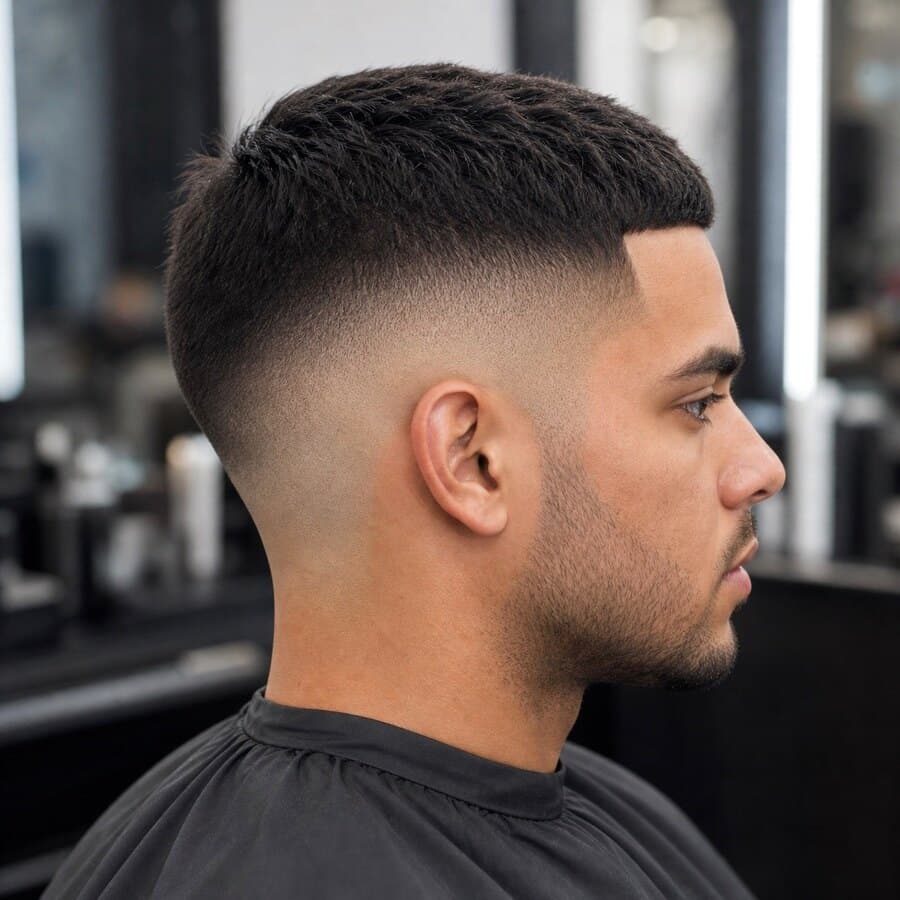
A high-contrast buzz cut blended down to bare skin, with a very sharp finish and frequent maintenance.
Illustrative only. Not a prediction or barber-reviewed reference.
Quick answers
Answers reflect common usage, not universal standards. Your barber's wording wins any disagreement.
Often yes — both mean the shortest point reaches bare skin. Usage varies by shop, so describe the outcome you want rather than trusting either name alone.
The bare-skin section typically loses its crispness within days as stubble returns. Most people who prefer the sharp look rebook frequently.
Razor work on sensitive skin can cause irritation. Say that your skin is sensitive before the cut; a trimmer finish or a shadow endpoint are common adjustments.
Continue comparing